Staggering corruption
During his first term Trump enriched himself (and his family) by cashing in on the presidency to an unprecedented degree, taking in $594 million in his first year in office, mostly from golf and real estate.
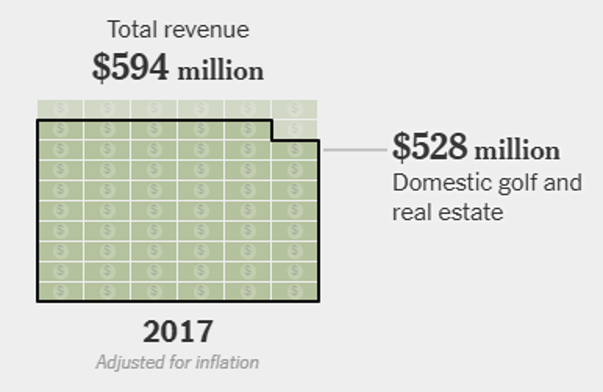
(All graphs in this section are from the New York Times report, “How Trump Is Getting Richer in Office.”)
Things looked dramatically different in the first year of his second go-round as president:
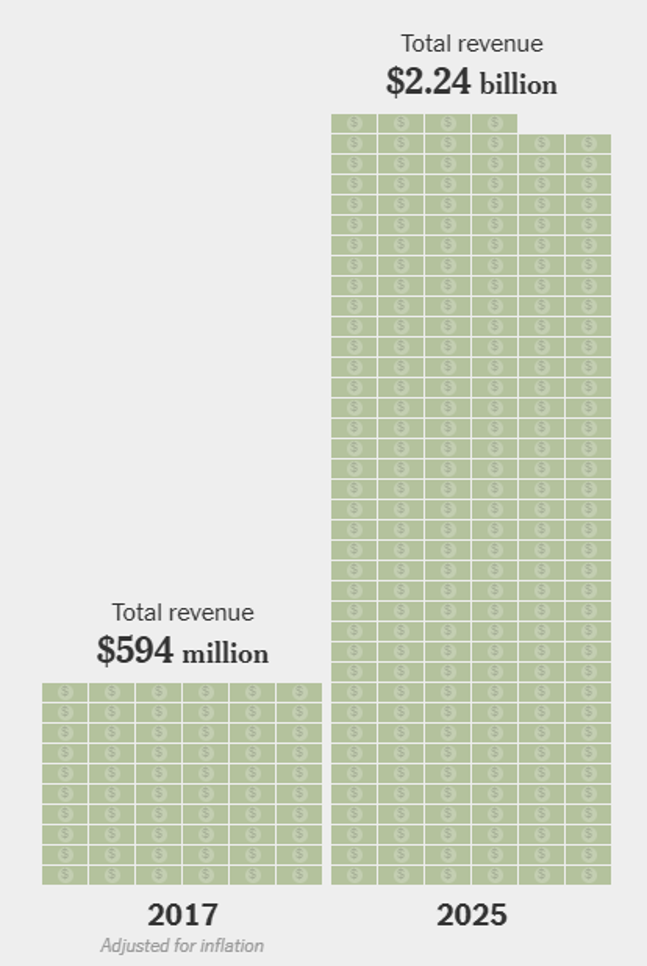
This came mostly from crypto deals:
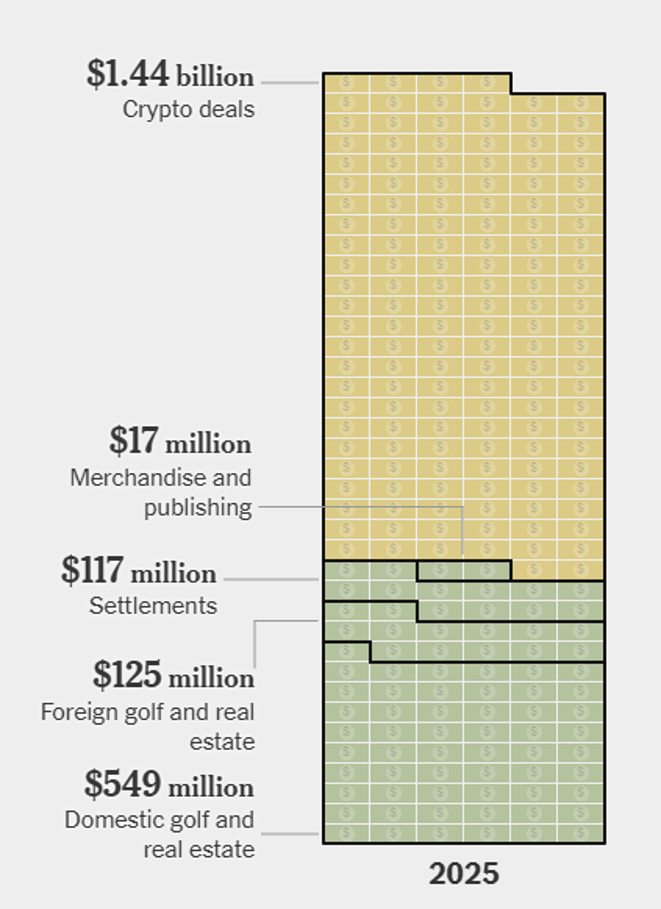
The reporting from Andrea Fuller, Daniel Wood, and Ben Protess has all the dirty details. Fuller offers a video wrap up:
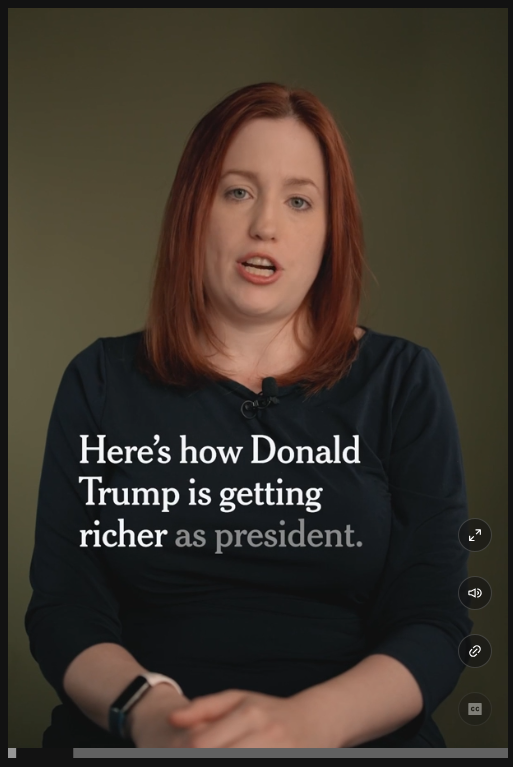
“Most other presidents in recent memory have gone out of their way to divest from anything that could pose a potential conflict of interest. But being back in the White House has brought a huge windfall for President Trump in a way that stands out from any other administration in recent history.”
It’s worse than a money grab
Senator Adam Schiff provided another take on Trump’s historic corruption (countdown from 10 to 1) in a speech on the Senate floor last week:
Schiff notes that the cost to the country is not just Trump lining his own (and his family’s) pockets: “When the president is fixated only on his family’s personal wealth, on the money he can make by abusing the power of his position, on his own vanity projects, gilding the White House, gilding statues and gilding a ballroom, he has very little time or inclination to address the problems facing ordinary Americans. They are mere afterthought, and the country suffers.”
Here’s a quick review of Schiff’s list:
Number 10: Trump licensing agreement overseas (and being beholden to foreign governments when making U.S. policy)
Number 9: Lawsuits against media (as the price of favorable policies, which don’t benefit the public)
Number 8: Suing social media platforms – Twitter, YouTube, Meta (collecting payoffs and squelching criticism)
Number 7: Handouts to the family, with Amazon’s multimillion dollar payment to Melania for a documentary about herself front and center (keeping Amazon in the good graces of the administration)
Number 6: The Trump memecoin, “a kind of a “joke” digital currency. But Trump still saw the opportunity for personal profit – about $635 million worth.
And the people on the other side of that trade? More than 810,000 of them have lost a combined two billion dollars. That’s 810,000 people that bought this memecoin, this Trump memecoin, mainly the president’s own supporters, lost money so the president could make hundreds of millions of dollars. ”
Worse yet: Trump auctions off presidential access to deep pocketed investors and calls off the law for fraudsters who funnel cash to Trump family businesses.
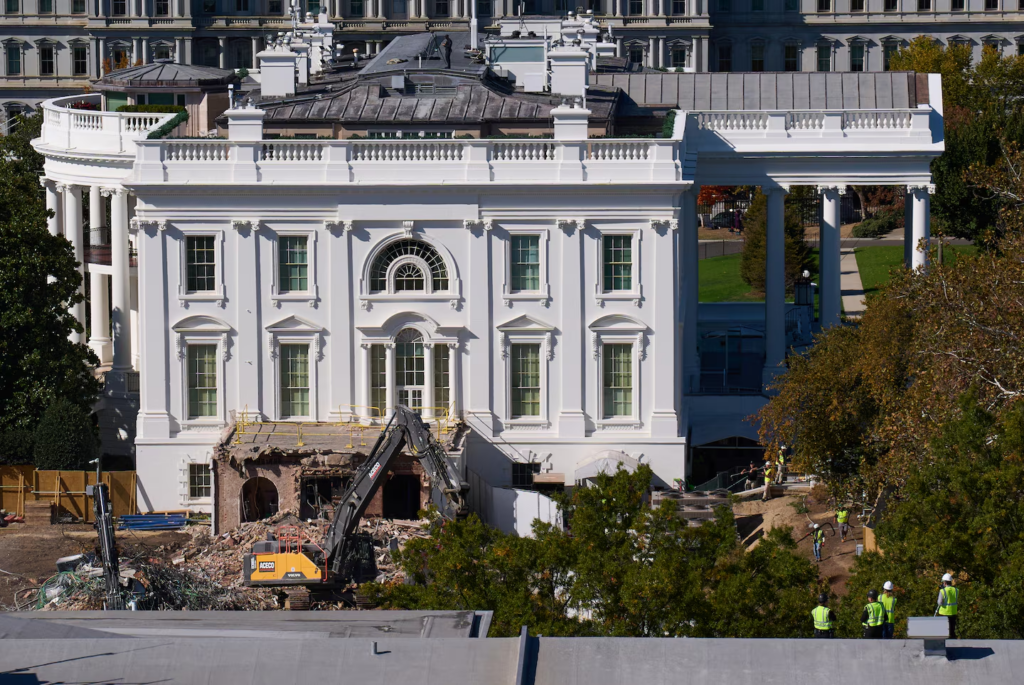
Number 5: “Number five is one of the most audacious schemes in presidential history: the gold-plated, gilded, and gaudy White House ballroom. The president has solicited ever-larger donations for this pet project – which now has a whopping price tag of $600 million.“
There are at least 37 big donors for the project. “Among them, Amazon and Apple and Google and Meta and Microsoft and Coinbase and Tether and Caterpillar and Lockheed Martin and T-Mobile. And more.
Of these corporate donors, two-thirds have been awarded federal contracts over the last five years – contracts worth $279 billion. And fourteen of them are either facing, or have had suspended, federal actions for violations of the law.“
And hundreds of millions of taxpayer dollars as well. Unmentioned by Schiff: there’s a no-bid contract for this project. And Trump is raiding the National Parks funding to pay for his White House renovations.
In the before days, there would be Congressional oversight and pushback. Not under this regime.
Number 4: “A $400 million luxury jet, “gifted” by the government of Qatar, to serve as Air Force One through the end of Trump’s term.
And then? Transferred to Trump’s own museum foundation. His to keep!“
Again: this deal with the Qataris implies a foreign policy quid pro quo at the expense of our national security. And: taxpayers will shell out $1 billion to renovate the “free” plane.
Number 3: The corrupt deal with the huge national law firms that lacked the conviction to oppose his authoritarian designs (barely two months into his second term). As Schiff relates, nine firms pledged nearly a billion dollars of pro bono work. “Nine hundred and forty million dollars, extracted under threat.” The money didn’t go into Trump’s pockets; instead it was “redirected to causes he favors, surrendered by law firms who were afraid of what he might do to them if they refused.”
Number 2: “World Liberty Financial. The Trump family cash cow.
…
A single deal tied to a state-backed fund in the United Arab Emirates funneled $500 million into this venture. A single deal, made by a wealthy sheik who is also head of that country’s intelligence service. What could go wrong? And in return, they just got American made advanced AI chips, just like they wanted.“
Biance, the world’s largest crypto exchange, was instrumental in “settling a $2 billion investment from an Abu Dhabi state fund in the Trump coin” and Biance’s founder, convicted of money-laundering received a presidential pardon.
“The cost of this corruption? Crooked deals to benefit convicted fraudsters. U.S. foreign policy for sale to the highest gulf bidder. Less time, attention and resources of the country focused on bringing down your costs, improving your quality of life, bringing back prosperity to America.“
Number 1: The IRS “settlement” with Trump giving him more than $1.776 billion for a slush fund to pay off his supporters (such as the January 6 insurrectionists) and the promise of immunity for Trump and his family from future IRS audits (estimated benefit to the Trump clan: $100 million)!
A district judge voided the agreement, though it could rise from the dead in the next two and a half years. Meanwhile, Senator John Cornyn (a lame duck who lost his primary to a crooked Texas AG after Trump opposed his reelection) has derailed for a time the confirmation of Todd Blanche (Trump’s personal attorney responsible for the sham settlement) as Attorney General until the senator gets something-something-something in writing. This is an ongoing story (and Blanche could continue to serve as acting AG even if the Senate rejects his nomination).
Schiff’s estimate of the cost of this top ten list: Six billion dollars. $6,000,000,000.00
The United States of America has never seen anything like this. Nothing this brazen. Nothing even approaching this scale. And no one before like the grifter who resides in the White House today.
Or like the political party in league with him. No Congress so deferential to presidential corruption. No Supreme Court so willing to trash the Constitution in order to enable a lawless regime.